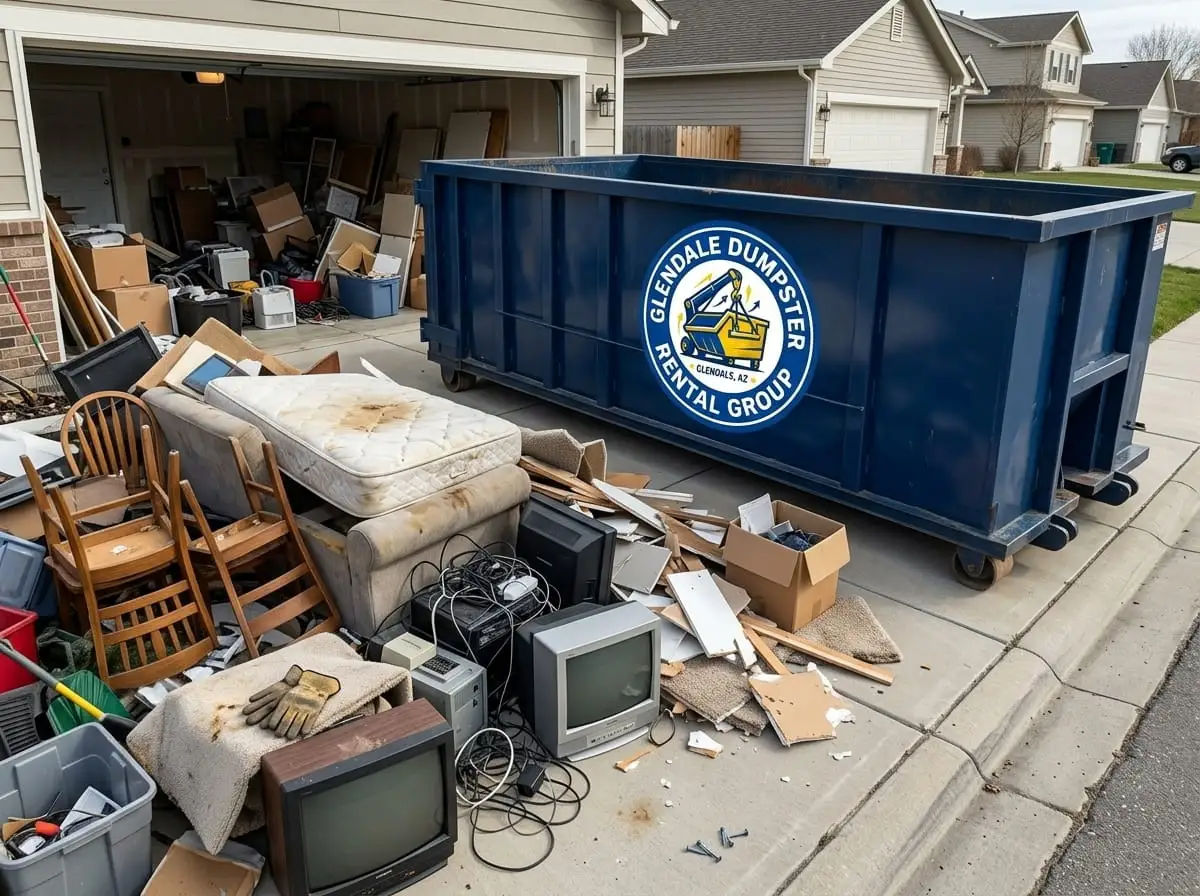

Spring Cleanout Guide for Glendale, AZ Homeowners
Spring is Glendale's prime cleanout window — the stretch to get outdoor work done before the summer heat arrives. Here's what fills a container, and how to book before the rush.
ReadStorm Debris guide
Arizona's monsoon runs mid-June through September — haboobs, microbursts, flash floods. How to clear the debris and protect your insurance claim.

Arizona's monsoon season runs from mid-June into late September, and it does real damage across the West Valley. A single microburst can drop a mature tree onto a roof or flatten a run of block fence in minutes; a haboob coats everything in dust and downs limbs; and a hard monsoon cell can flood a low-lying yard or wash debris across a property. Glendale sits squarely in that path, and the cleanup afterward has a rhythm worth knowing.
The common calls are downed and split trees — palo verde, mesquite and older non-native trees are especially prone to going over in saturated soil — along with broken fencing, torn-off roofing tile and shingles, patio and shade-structure debris, and the general limb-and-branch litter a big cell scatters. Flash flooding adds soaked drywall, ruined flooring and yard debris pushed around by moving water.
If you're going to file an insurance claim, photograph everything before it goes in the container — the tree on the roof, the collapsed fence, the water line on the wall. A roll-off actually helps the claim rather than hurting it: it lets you stage and separate the damaged material so an adjuster can see the scope, instead of it being hauled off before anyone documents it. Keep the debris visible and organized until you've got your photos and your claim number.
Storm debris is deceptive. Tree limbs and fencing are bulky but relatively light, so they fill by volume — a 20 or 30 yard often makes sense for a big tree-and-fence job. But if the storm took a tile roof, that debris is dense and heavy, and you'll hit the weight limit long before the box looks full. Tell us what the mix is when you call and we'll size for whichever limit — volume or weight — stops you first.
After a widespread storm, everyone in the county wants a container at once, so availability tightens for a few days. Calling early gets you in the queue. And if the container needs to sit in the street because a tree is blocking the driveway, remember that's a right-of-way placement — in Glendale a no-fee city permit, and a Maricopa County matter in the Sun Cities — so flag it and we'll help you sort it quickly.
We deliver fast after monsoon storms for exactly this work: tree and limb debris, fencing, roofing tear-off, water-damaged interior material and flood debris, with the sorting that keeps a load legal and a claim intact. One call gets you a flat price and a delivery window while the cleanup is still fresh.
Talk to a real person
Call (623) 235-8274 and describe the job. Flat price, stated tonnage allowance, and a delivery window on the same call.
Mon–Sat 7:00am – 6:00pm
From this guide
Photograph everything first, and where you can, keep the damaged material staged and visible until you have your photos and claim number. A roll-off lets you separate and organize debris for the adjuster rather than losing evidence to an early haul-off.
Bulky tree limbs and fencing usually point to a 20 or 30 yard by volume. If a tile roof came off, that's heavy — you'll hit the weight limit sooner, so we size for weight instead. Tell us the mix and we'll get it right.
We prioritize storm calls, but demand spikes across the county for a few days after a big cell, so call early. Same- or next-day is common if you're not at the back of the rush.
Keep reading
Spring is Glendale's prime cleanout window — the stretch to get outdoor work done before the summer heat arrives. Here's what fills a container, and how to book before the rush.
ReadRoofing debris is heavier than it looks. Here's how to size correctly by layer count, and time delivery around a roofer's schedule.
ReadClearing a long-owned Glendale family home is rarely a job you can size on the first call. Here's how to plan it without rushing the process.
Read