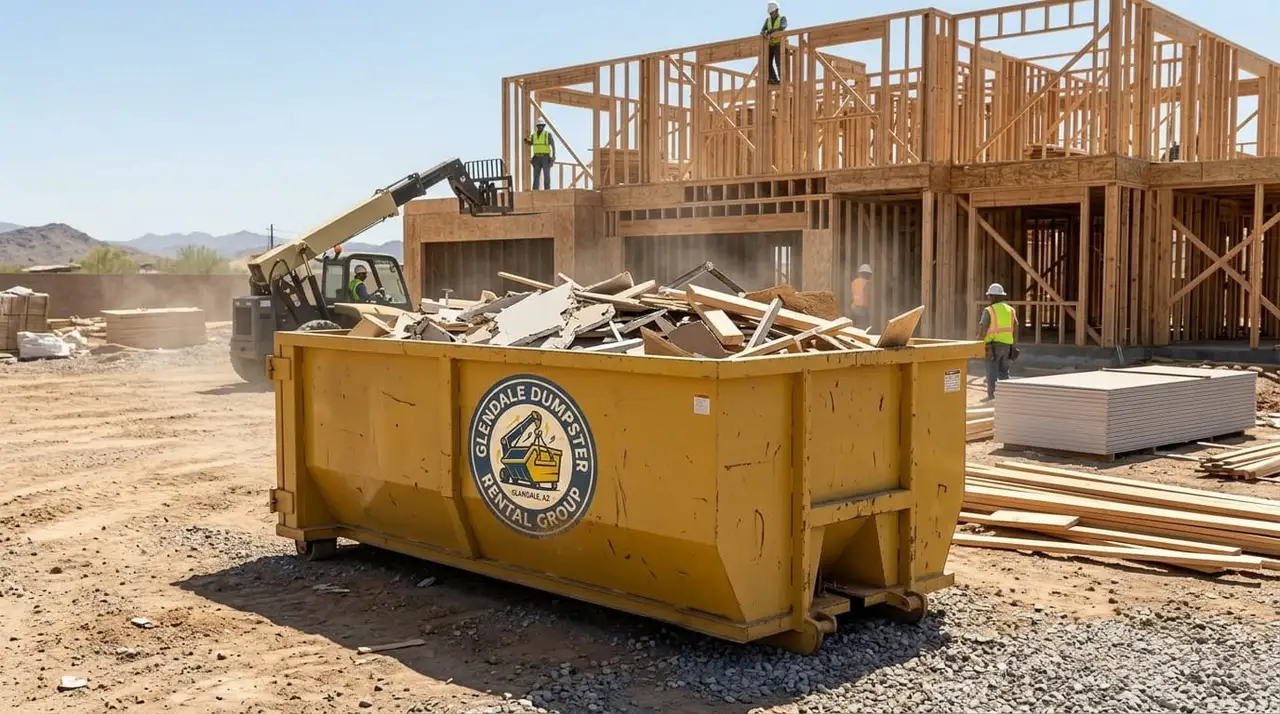
New Construction & Addition Dumpster Guide for Glendale, AZ
Glendale's construction work is mostly additions and infill on established lots, not new subdivisions. Here's how to size and schedule around it.
ReadLandscaping guide
Turf-to-gravel conversions throw off heavy rock, gravel and green waste. How to size a Glendale dumpster so weight doesn't stop you first.
Desert-landscaping and xeriscape projects are some of the most common work we support in Glendale — pulling out thirsty lawns and dated rock, and putting in gravel, decomposed granite, pavers and low-water plants. It's a smart move in the Arizona climate, but the debris it produces catches a lot of homeowners off guard, because it breaks two rules at once: some of it is extremely heavy, and some of it is light and bulky.
A conversion typically generates old sod and turf, dead or removed plants, palm fronds, oleander and hedge clearings on the light-and-bulky side — and old landscape rock, decomposed granite, gravel, broken pavers, concrete edging and mortar on the heavy side. The green waste fills a container by volume; the rock and concrete fill it by weight. You almost never hit both limits at the same time.
This is the single most important thing to get right. Landscape rock and gravel are dense — a container of it can weigh many tons while barely looking half full. Because the Glendale Municipal Landfill charges by the ton at the gate, and because every roll-off has a weight limit as well as a volume limit, a rock-and-gravel load almost always calls for a smaller container filled part-way, not a big one. A 10 yard is frequently the right answer for a heavy tear-out, even when the pile looks like it should need more.
If your project has both — say you're pulling turf and old gravel and trimming back overgrown plants — it's often cheaper to think of them as two loads, or at least to load the heavy material first and cap it well under the weight line. Mixing a full container of gravel with a mound of palm fronds on top is how people blow past a tonnage allowance without realizing it.
Arizona's native plant law protects saguaros and certain other native desert species. If your redesign involves removing protected native plants — not the same as ordinary shrubs or non-native trees — that's regulated by the Arizona Department of Agriculture and isn't simply a container question. Worth a quick check before you start digging.
We deliver containers sized specifically for these jobs — heavy low-fill roll-offs for rock, gravel and concrete, and larger boxes for green-waste-heavy clearing. Tell us on the phone what the split is between heavy material and green waste, and we'll match the container and the tonnage so you stay legal on weight and don't pay for space you can't use.
Talk to a real person
Call (623) 235-8274 and describe the job. Flat price, stated tonnage allowance, and a delivery window on the same call.
Mon–Sat 7:00am – 6:00pm
From this guide
Because it's dense. A roll-off has a weight limit as well as a volume limit, and rock or gravel hits the weight limit long before the box looks full. A 10 yard filled part-way is often the right, and cheaper, call for a heavy tear-out.
You can, but be careful — load the heavy rock first and keep it well under the weight line, then add lighter green waste. Piling fronds on top of a full gravel load is how people blow past a tonnage allowance without noticing.
Ordinary green waste, turf, rock and gravel are fine. Protected native plants like saguaros are the exception — they're regulated by the Arizona Department of Agriculture, so check before removing one.
Keep reading
Glendale's construction work is mostly additions and infill on established lots, not new subdivisions. Here's how to size and schedule around it.
ReadReal West Valley pricing, explained honestly: what drives the number, what a flat rate actually includes, and how pay-by-weight tipping at the Glendale landfill affects heavy loads.
ReadA straight answer on what's allowed, what isn't, and where the prohibited stuff actually needs to go instead — before it costs you a charge-back fee.
Read